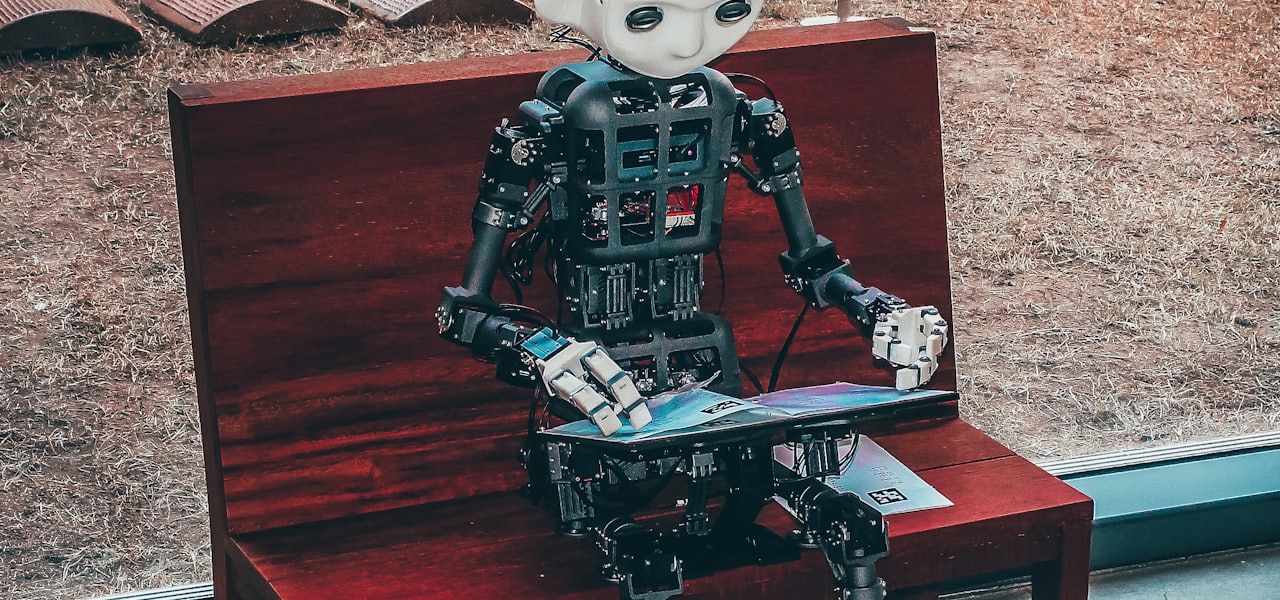
Neuroph is an object-oriented artificial neural network framework written in Java. It can be used to create and train neural networks in Java programs. Neuroph provides Java class library as well as GUI tool easyNeurons for creating and training neural networks. It is an open-source project hosted at SourceForge under the Apache License. Versions before 2.4 were licensed under LGPL 3, from this version the license is Apache 2.0 License. == Features == Neuroph's core classes correspond to basic neural network concepts like artificial neuron, neuron layer, neuron connections, weight, transfer function, input function, learning rule etc. Neuroph supports common neural network architectures such as Multilayer perceptron with Backpropagation, Kohonen and Hopfield networks. All these classes can be extended and customized to create custom neural networks and learning rules. Neuroph has built-in support for image recognition.
Signal transfer function
The signal transfer function (SiTF) is a measure of the signal output versus the signal input of a system such as an infrared system or sensor. There are many general applications of the SiTF. Specifically, in the field of image analysis, it gives a measure of the noise of an imaging system, and thus yields one assessment of its performance. == SiTF evaluation == In evaluating the SiTF curve, the signal input and signal output are measured differentially; meaning, the differential of the input signal and differential of the output signal are calculated and plotted against each other. An operator, using computer software, defines an arbitrary area, with a given set of data points, within the signal and background regions of the output image of the infrared sensor, i.e. of the unit under test (UUT), (see "Half Moon" image below). The average signal and background are calculated by averaging the data of each arbitrarily defined region. A second order polynomial curve is fitted to the data of each line. Then, the polynomial is subtracted from the average signal and background data to yield the new signal and background. The difference of the new signal and background data is taken to yield the net signal. Finally, the net signal is plotted versus the signal input. The signal input of the UUT is within its own spectral response. (e.g. color-correlated temperature, pixel intensity, etc.). The slope of the linear portion of this curve is then found using the method of least squares. == SiTF curve == The net signal is calculated from the average signal and background, as in signal to noise ratio (imaging)#Calculations. The SiTF curve is then given by the signal output data, (net signal data), plotted against the signal input data (see graph of SiTF to the right). All the data points in the linear region of the SiTF curve can be used in the method of least squares to find a linear approximation. Given n {\displaystyle n\,} data points ( x i , y i ) {\displaystyle (x_{i}\,,y_{i}\,)} a best fit line parameterized as y = m x + b {\displaystyle y=mx+b\,} is given by: m = ∑ x i y i n − ∑ x i n ∑ y i n ∑ x i 2 n − ( ∑ x i n ) 2 b = ∑ y i n − m ∑ x i n {\displaystyle m={\frac {{\frac {\sum x_{i}y_{i}}{n}}-{\frac {\sum x_{i}}{n}}{\frac {\sum y_{i}}{n}}}{{\frac {\sum x_{i}^{2}}{n}}-({\frac {\sum x_{i}}{n}})^{2}}}\qquad \qquad b={\frac {\sum y_{i}}{n}}-m{\frac {\sum x_{i}}{n}}}
Mark Keane (cognitive scientist)
Mark Thomas Gerard Keane (Irish: Marcus Ó Cathain, born 3 July 1961, Dublin, Ireland) is a cognitive scientist and author of several books on human cognition and artificial intelligence, including Cognitive Psychology: A Student's Handbook (8 editions, with Michael Eysenck), Advances in the Psychology of Thinking (1992, with Ken Gilhooly), Novice Programming Environments (1992/2018, with Marc Eisenstadt and Tim Rajan), Advances in Case-Based Reasoning (1995, with J-P Haton and Michel Manago)., Case-Based Reasoning: Research & Development (2022, with N Wiratunga). == Education == Keane received a B.A. in Psychology from University College Dublin in 1982. He then received a Ph.D. from Trinity College Dublin in 1987. He then moved to postdoctoral positions in Queen Mary University of London and the Open University. == Academic career == He was a Lecturer in Psychology at Cardiff University. He became a lecturer in Computer Science at Trinity College Dublin in 1990, and became a fellow in 1994. Keane moved to become Chair of Computer Science at University College Dublin in 1998. In 2006, he was seconded to Science Foundation Ireland as Director of ICT, overseeing on a $700m research investment. He advised the Irish Government on its 3.7B euro Strategy for Science, Technology & Innovation (SSTI). From 2006 to 2007, he was Director General of Science Foundation Ireland before returning to University College Dublin where he was appointed VP of Innovation & Partnerships (2007-2009). Keane's research has been split between cognitive science and computer science. His cognitive science research has been in analogy, metaphor, conceptual combination and similarity. His computer science research has been in natural language processing, machine learning, case-based reasoning, text analytics and explainable artificial intelligence. He has been a PI in the Science Foundation Ireland funded Insight Centre for Data Analytics working on digital journalism and digital humanities. More recently, he was deputy director of the VistaMilk SFI Research Centre that is exploring precision agriculture in the dairy sector.
The Best Free AI Code-review Tool for Beginners
Curious about the best AI code-review tool? An AI code-review tool is software that uses machine learning to help you get more done — it combines speed, accuracy, and an interface that just works. Hands-on testing shows real-world results vary, so a short free trial is the smartest way to decide. Whether you are a beginner or a pro, the right AI code-review tool slots into your workflow and pays for itself fast. This guide breaks down the top picks, their pros and cons, and who each one is best for.
Michael Collins (computational linguist)
Michael J. Collins (born 4 March 1970) is a researcher in the field of computational linguistics. He is the Vikram S. Pandit Professor of Computer Science at Columbia University. His research interests are in natural language processing as well as machine learning and he has made important contributions in statistical parsing and in statistical machine learning. In his studies Collins covers a wide range of topics such as parse re-ranking, tree kernels, semi-supervised learning, machine translation and exponentiated gradient algorithms with a general focus on discriminative models and structured prediction. One notable contribution is a state-of-the-art parser for the Penn Wall Street Journal corpus. As of 11 November 2015, his works have been cited 16,020 times, and he has an h-index of 47. Collins worked as a researcher at AT&T Labs between January 1999 and November 2002, and later held the positions of assistant and associate professor at M.I.T. Since January 2011, he has been a professor at Columbia University. In 2011, he was named a fellow of the Association for Computational Linguistics.
Light scanning photomacrography
Light Scanning Photomacrography (LSP), also known as Scanning Light Photomacrography (SLP) or Deep-Field Photomacrography, is a photographic film technique that allows for high magnification light imaging with exceptional depth of field (DOF). This method overcomes the limitations of conventional macro photography, which typically only keeps a portion of the subject in acceptable focus at high magnifications. == Historical background == The principles of LSP were first documented in the early 1960s by Dan McLachlan Jr., who highlighted its capability for extreme focal depth in microscopy and in 1968 patented the process. The technique was revived and further developed in the 1980s by photographers such as Darwin Dale and Nile Root, a faculty member at the Rochester Institute of Technology. In the early 1990s, William Sharp and Charles Kazilek, both researchers at Arizona State University, also published articles describing their technique and system setup for capturing SLP images. == Predecessor to stack image photography == Light Scanning Photomacrography offered a powerful analog tool for high-detail imaging in the age of film photography. It provided a comprehensive depth of field, making it invaluable in scientific and biomedical photography. As technology and techniques continue to evolve, LSP has been replaced by digital image focus stacking. This technique uses a collection of images captured in series at different focal depths, which are then processed using computer software to create a single image with a greater focus depth than any single image. == LSP technique and results == LSP involves the use of a thin plane of light that scans across the subject, which is mounted on a stage moving perpendicular to the film plane. The technique utilizes traditional optics and is governed by the physical laws of depth of field. By moving the subject through a narrow band of illumination, the entire subject can be recorded in sharp focus from the nearest details to the farthest ones. This analog process produces sharp and detailed images by slowly recording the image on film as the specimen passes through the sheet of light that is thinner than the effective DOF. Because the image is captured at the same relative distance from the camera lens, the resulting images are axonometric rather than perspective projection, which is what the human eye sees and is typically captured by a film camera. Because all parts of an LSP image are captured at the same distance from the lens, relative measurements can be taken from an LSP photograph and can be used for comparison. == Equipment and setup == A typical LSP setup includes: A stage that can move the subject perpendicular to the film plane. Light sources, in some cases modified projectors, are used to project a thin plane of light. A camera mounted on a stable stand such as a tabletop copy stand. In 1991, Sharp and Kazilek described their SLP system that used three Kodak Ektagraphic slide projectors with zoom lenses to create a thin plane of light. The projectors each had a slide mount with two razor blades placed edge-to-edge to create a thin slit for the light to pass through. The image was captured using a Nikon FE-2 SLR camera mounted above the specimen. Kodachrome 25 slide film was used to record the image and to minimize film grain size and maximize image sharpness == Commercial systems == A commercial SLP instrument was produced by the Irvine Optical Corp. Their DYNAPHOT system was based on a photomacroscope and could capture images on 4x5 film. The instrument came with two or three illumination sources and a motorized specimen stage. The system advertised a 2X – 40X magnification range and the ability to capture images in black and white and color. Other systems have been developed by Nile Root and Theodore Clarke and reported higher magnification (up to 100X). == LSP process == Alignment and Focusing: The light sources are aligned and focused to project a thin, consistent plane of light across the subject. Stage Movement: The subject stage moves at a controlled speed, scanning through the plane of light. Image Capture: The camera shutter is set to a long exposure or can be opened and closed manually. As the subject moves through the illuminated plane, it is recorded on the film. This process is very much like painting an image onto the film using photons instead of paint. == Applications == LSP was particularly useful in biomedical photography, where it was used to document magnified subjects with increased depth of field over traditional macro and micro photography. It has been employed to capture detailed images of biological specimens, such as imaging small insects and their parts. SLP has been used to document shell collections for scientific documentation and research. Other applications include forensic science, mineralogy, and the imaging of fractured surfaces and parts == Advantages and challenges of LSP imaging == === Advantages === Exceptional depth of field: Subjects are rendered in sharp focus throughout. High magnification: Detailed images at significant magnification without sacrificing DOF. Analog precision: Provides a non-digital solution with accurate image representation. Versatility: Can be used for a range of subject sizes, from macro to non-macro scales. === Challenges === Technical complexity: Requires precise setup and alignment. Exposure time: Typically requires long exposure times due to the scanning process. Contrast control: The highly directional lighting can create harsh shadows and high contrast, which may need to be managed. Digital competition: Focus stacking has largely replaced LSP in the digital era due to convenience and flexibility. == DIY contributions == Enthusiasts and researchers have contributed to the development and accessibility of LSP by creating and sharing DIY guides. These contributions have enabled others to build their own LSP systems using readily available materials and components. Nile Root's publications provide detailed instructions and recommendations for constructing an LSP setup. These DIY systems have allowed a wider audience to explore and utilize the benefits of LSP imaging in various fields.
How to Choose an AI Sales Assistant
In search of the best AI sales assistant? An AI sales assistant is software that uses machine learning to help you get more done — it turns a rough idea into a polished result in seconds. When choosing one, weigh output quality, pricing, export formats, and how well it fits the tools you already use. Whether you are a beginner or a pro, the right AI sales assistant slots into your workflow and pays for itself fast. Below we compare features, pricing, and real output so you can choose with confidence.